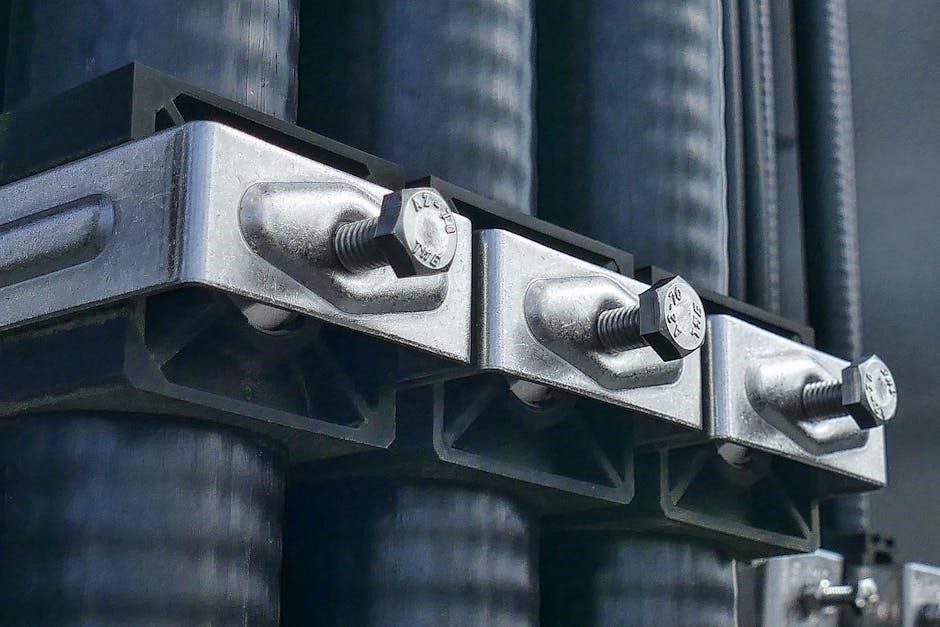
Structural adhesives offer a compelling alternative to traditional methods‚ diminishing reliance on fasteners and welds while simultaneously boosting component strength and longevity․
These innovative solutions‚ detailed in selector guides‚ are designed for ease of use and provide valuable insights into material selection․
The Rise of Adhesives in Structural Engineering
Historically‚ structural engineering relied heavily on mechanical fasteners and welding techniques․ However‚ a significant shift is underway‚ driven by the increasing adoption of adhesive joining․ This evolution stems from the inherent advantages adhesives offer in specific applications‚ particularly where weight reduction‚ corrosion resistance‚ and stress distribution are critical․
Modern structural adhesives‚ as explored in recent publications‚ are no longer limited to secondary bonding roles․ They are now capable of handling substantial loads and are being implemented in primary structural components across diverse industries – aerospace‚ automotive‚ and civil infrastructure․ The availability of comprehensive selector guides further facilitates informed material choices‚ empowering engineers to optimize designs and enhance performance․ This rise reflects a growing understanding of adhesive capabilities and a demand for innovative joining solutions․
Advantages Over Traditional Joining Methods (Welding‚ Fastening)
Compared to welding and fastening‚ structural adhesives present several key benefits․ They distribute stress more evenly across the joint‚ reducing stress concentrations that can lead to failure․ This results in stronger‚ more durable bonds‚ particularly in dissimilar material combinations where welding can be problematic․
Furthermore‚ adhesives minimize weight by eliminating the need for bulky fasteners and associated reinforcement․ They also offer superior corrosion resistance‚ as they create a barrier against environmental elements․ Selector guides highlight how adhesives can simplify assembly processes and reduce manufacturing costs; These advantages‚ coupled with advancements in adhesive technology‚ are driving their increased adoption in demanding structural applications․
Fundamentals of Structural Adhesives
Structural adhesives rely on complex chemical formulations to create robust bonds‚ offering exceptional strength and durability for demanding engineering applications․
Adhesive Chemistry: Epoxy‚ Acrylic‚ Polyurethane‚ and Silicone
Epoxy adhesives are renowned for their high strength‚ chemical resistance‚ and versatility‚ forming a rigid‚ durable bond ideal for demanding structural applications․ Acrylic adhesives‚ conversely‚ offer rapid curing speeds and excellent adhesion to diverse substrates‚ making them suitable for fast-paced assembly lines․
Polyurethane adhesives exhibit exceptional flexibility and impact resistance‚ proving advantageous in applications subject to vibration or dynamic loading․ Finally‚ silicone adhesives excel in high-temperature environments and provide outstanding resistance to weathering and UV exposure‚ ensuring long-term performance in harsh conditions․ Each chemistry presents unique properties‚ allowing engineers to tailor adhesive selection to specific performance requirements and environmental factors․
Key Properties: Strength‚ Toughness‚ Durability‚ and Temperature Resistance
Strength‚ measured in tensile and shear capacities‚ dictates an adhesive’s ability to withstand applied loads without failure․ Toughness‚ representing resistance to crack propagation‚ is crucial for impact resistance and preventing brittle fracture․ Durability encompasses long-term performance under environmental stressors like moisture‚ chemicals‚ and UV radiation‚ ensuring joint longevity․
Temperature resistance defines the adhesive’s operational range‚ maintaining bond integrity across varying thermal conditions․ These properties aren’t isolated; a balance is vital․ High strength without sufficient toughness can lead to catastrophic failure․ Selector guides aid in identifying adhesives that optimally combine these characteristics for specific structural demands‚ maximizing reliability and service life․

Surface Preparation for Optimal Bonding
Proper surface preparation is paramount for achieving robust adhesion‚ involving thorough cleaning and modification to enhance wettability and maximize bond strength․
Cleaning Methods: Solvents‚ Abrasives‚ and Plasma Treatment
Effective cleaning is crucial for removing contaminants like oils‚ dust‚ and oxidation layers that hinder adhesive bonding․ Solvents‚ such as isopropyl alcohol‚ are commonly used for degreasing‚ but compatibility with the substrate must be verified․
Abrasive methods‚ including grit blasting or sanding‚ mechanically remove surface imperfections and increase surface area for better adhesion․ However‚ care must be taken to avoid damaging the substrate․
Plasma treatment offers a sophisticated approach‚ utilizing ionized gas to modify surface energy and create chemically active sites‚ promoting superior bonding‚ especially for challenging materials․ This method ensures a pristine surface‚ enhancing long-term durability and joint performance․
Surface Energy and its Impact on Adhesion
Surface energy is a critical factor governing adhesive wetting and spreading‚ directly influencing bond strength․ Higher surface energy substrates‚ like metals‚ generally exhibit better adhesion compared to low-energy polymers․
Wetting occurs when the adhesive’s surface tension is lower than the substrate’s surface energy‚ allowing intimate contact․ Insufficient wetting leads to weak interfacial bonds and potential failure․
Treatments like plasma etching or chemical priming can increase surface energy‚ improving wettability and adhesion․ Understanding and controlling surface energy is paramount for achieving reliable and durable adhesive joints in structural applications‚ ensuring long-term performance and structural integrity․

Joint Design Considerations
Effective joint design is crucial‚ focusing on optimized stress distribution—managing shear‚ peel‚ and tensile forces—and controlling bondline thickness for peak performance․
Stress Distribution in Adhesive Joints: Shear‚ Peel‚ and Tension
Understanding stress distribution within adhesive joints is paramount for reliable structural performance․ Adhesive bonds experience varying stresses depending on the joint geometry and applied loads․ Shear stress arises from forces acting parallel to the bonded surface‚ often dominating in lap joints․ Conversely‚ peel stress‚ a weakening force‚ occurs when a tensile load attempts to separate the adhesive from the substrate‚ particularly in configurations like simple butt joints․
Tensile stress develops when a force pulls directly on the bonded area․ Minimizing peel stress is critical‚ as adhesives generally exhibit lower peel strength compared to shear or tensile strength․ Careful joint design‚ incorporating features like stepped laps or scarf joints‚ can effectively redistribute stresses‚ reducing peel components and maximizing joint strength․ Analyzing these stress states allows engineers to select appropriate adhesives and optimize joint configurations for specific loading scenarios‚ ensuring long-term structural integrity․
Bondline Thickness and its Influence on Performance
Bondline thickness‚ the gap between adhered surfaces‚ significantly impacts adhesive joint performance․ Maintaining an optimal bondline is crucial; too thin restricts adhesive flow and wetting‚ hindering complete surface contact․ Conversely‚ excessively thick bondlines can lead to reduced strength due to increased stress concentration and potential for void formation․
Adhesive manufacturers specify recommended bondline thicknesses for each product‚ typically ranging from 0․05 to 0․25 mm․ Proper surface preparation and the use of spacers are essential for achieving consistent thickness․ Variations in bondline thickness can introduce uneven stress distribution‚ potentially initiating premature failure․ Controlling this parameter ensures predictable and reliable joint behavior‚ maximizing the adhesive’s inherent strength and durability‚ ultimately contributing to long-term structural integrity․
Advanced Adhesive Technologies
Innovative adhesives‚ like toughened epoxies and reactive acrylics‚ are revolutionizing structural bonding with enhanced impact resistance and remarkably fast curing speeds․
Toughened Epoxy Adhesives for Impact Resistance
Epoxy adhesives‚ renowned for their strength and versatility‚ are further enhanced through toughening modifications‚ specifically designed to elevate impact resistance in structural applications․
These advancements involve incorporating rubber particles or other flexible polymers into the epoxy matrix‚ creating a material capable of absorbing and dissipating energy upon impact․
This results in significantly improved resistance to crack initiation and propagation‚ crucial for components subjected to dynamic loads or harsh environments․
Selector guides highlight these toughened epoxies as ideal for aerospace‚ automotive‚ and marine industries‚ where impact durability is paramount․ They offer a balance of high strength and flexibility‚ extending the lifespan and reliability of bonded structures․
Furthermore‚ ongoing research focuses on optimizing toughening agents and epoxy formulations to achieve even greater impact performance․
Reactive Acrylic Adhesives: Fast Curing and High Strength
Reactive acrylic adhesives represent a significant advancement in structural bonding‚ offering a unique combination of rapid curing speeds and exceptional bond strength․ These adhesives polymerize quickly‚ often within seconds to minutes‚ minimizing assembly time and increasing production efficiency․
Their high strength characteristics stem from the acrylic monomers’ ability to form robust‚ cross-linked polymer networks․ Selector guides emphasize their suitability for high-volume manufacturing and applications demanding immediate load-bearing capabilities․
Unlike some epoxies‚ reactive acrylics typically require minimal surface preparation‚ further streamlining the bonding process․ They excel in bonding diverse substrates‚ including plastics‚ metals‚ and composites․
Ongoing innovations focus on enhancing their durability and temperature resistance‚ expanding their application range across various industries․

Non-Destructive Testing (NDT) Methods
NDT techniques‚ like ultrasonic testing and thermography‚ are crucial for verifying adhesive joint integrity without causing damage‚ ensuring long-term structural reliability;
Ultrasonic Testing for Bond Integrity
Ultrasonic testing (UT) emerges as a premier non-destructive evaluation (NDE) technique for assessing adhesive bond quality in structural applications․ This method leverages high-frequency sound waves to detect internal flaws‚ such as voids‚ delaminations‚ and insufficient adhesive coverage‚ without compromising the structural component’s integrity․
UT operates by transmitting ultrasonic waves into the adhesive joint and analyzing the reflected signals․ Variations in acoustic impedance‚ caused by defects‚ generate echoes that reveal the presence and location of imperfections․ Advanced UT systems employ phased array technology and time-of-flight diffraction (TOFD) to enhance defect characterization and improve accuracy․
Proper calibration and skilled interpretation of ultrasonic data are essential for reliable results․ UT is particularly effective for inspecting large-area bonds and complex geometries‚ providing a comprehensive assessment of adhesive joint performance and durability․
Thermography for Detecting Delaminations
Thermography‚ also known as infrared imaging‚ provides a rapid and non-contact method for identifying delaminations and other subsurface defects within adhesive bonds․ This technique relies on detecting temperature variations on the surface of the bonded structure‚ which are indicative of underlying anomalies․
Delaminations disrupt heat flow‚ creating localized temperature differences that are visualized as thermal patterns․ Active thermography‚ employing an external heat source‚ enhances defect detection by inducing a larger temperature contrast․ Analyzing these thermal images allows for the precise location and assessment of delamination size and shape․
Thermography is particularly useful for inspecting large and complex structures‚ offering a cost-effective and efficient means of evaluating adhesive joint integrity․ Careful consideration of environmental factors and surface emissivity is crucial for accurate interpretation of thermographic data․

Durability and Long-Term Performance
Long-term adhesive joint performance hinges on resisting environmental stressors like moisture‚ temperature fluctuations‚ and UV radiation‚ impacting fatigue and creep․
Environmental Factors: Moisture‚ Temperature‚ and UV Exposure
Adhesive joint durability is profoundly affected by environmental exposure‚ demanding careful consideration during material selection and application; Moisture ingress can lead to swelling‚ plasticization‚ or hydrolysis of the adhesive‚ significantly reducing its strength and stiffness over time․
Temperature variations induce thermal stresses within the joint‚ potentially causing bond failure‚ especially with adhesives exhibiting large coefficients of thermal expansion mismatch with the substrates․ Prolonged exposure to elevated temperatures can accelerate degradation processes․
Furthermore‚ ultraviolet (UV) radiation can break down polymer chains within the adhesive‚ leading to embrittlement and loss of adhesive properties․ Protective coatings or UV-stabilized adhesive formulations are often necessary to mitigate these effects‚ ensuring long-term structural integrity in outdoor applications․
Fatigue and Creep Behavior of Adhesive Joints
Adhesive joints exhibit unique fatigue and creep characteristics differing from traditional mechanical fasteners․ Cyclic loading can initiate crack growth at the bondline‚ leading to eventual failure even under stresses below the static strength of the adhesive․ Understanding the fatigue resistance is crucial for dynamic applications․
Creep‚ the time-dependent deformation under sustained load‚ is also a significant concern․ Adhesive polymers can slowly deform over time‚ resulting in stress redistribution and potential joint loosening․ Factors like temperature and load magnitude accelerate creep rates․
New insights focus on characterizing these behaviors through advanced testing and modeling‚ enabling more accurate prediction of long-term performance and improved joint designs for enhanced durability and reliability․
Adhesive Selection Guides and Tools
Comprehensive selector guides and specialized software assist engineers in identifying optimal adhesives based on application demands and material properties․
Utilizing Selector Guides for Specific Applications
Adhesive selector guides are invaluable resources streamlining the material selection process for diverse structural applications․ These guides typically categorize adhesives based on key performance characteristics – strength‚ temperature resistance‚ chemical compatibility‚ and substrate materials․
They often present adhesives in a matrix format‚ allowing for quick comparison and identification of suitable candidates․ Furthermore‚ many guides incorporate decision trees or flowcharts‚ guiding users through a series of questions to narrow down the options․
Specific application examples‚ such as aerospace bonding‚ automotive assembly‚ or marine construction‚ are frequently highlighted‚ demonstrating practical usage․ Modern guides are increasingly digital‚ offering interactive features and links to detailed product data sheets‚ ensuring informed decisions․
Software and Databases for Adhesive Material Properties
Specialized software and comprehensive databases are becoming essential tools for engineers designing with structural adhesives․ These resources move beyond basic selector guides‚ offering detailed material property data – including shear modulus‚ tensile strength‚ and fatigue resistance – crucial for accurate finite element analysis (FEA)․
Many platforms allow users to input specific operating conditions‚ such as temperature and humidity‚ to predict long-term adhesive performance․ Some databases integrate with CAD software‚ facilitating seamless material assignment during the design phase․
Cloud-based solutions provide access to continually updated data and collaborative features‚ while advanced software packages incorporate predictive modeling capabilities‚ optimizing joint designs for maximum durability and reliability․